How to Use the New Virtual Appointments in Microsoft Teams
Scheduling appointments is a common activity. Salespeople often set up virtual appointments to answer questions about a product. Software companies allow people to schedule live demos. Telehealth therapists allow clients to book video sessions.
Those are just a few examples of some groups that are going to love a new Microsoft Teams feature. Virtual Appointments was recently added to the platform. It adds a new meeting style tailored for engagements with customers.
Have you’ve been using Teams and a different online appointment app? This new feature will streamline the experience.
What Is Virtual Appointments in Teams?
Virtual Appointments gives you an all-in-one meeting platform for customer engagements. You can schedule, manage and conduct B2C meetings in Microsoft Teams.
This new feature brings together the scheduling component with the video conference interface. Anyone with the link can join the virtual appointment. They do not need a Teams account.
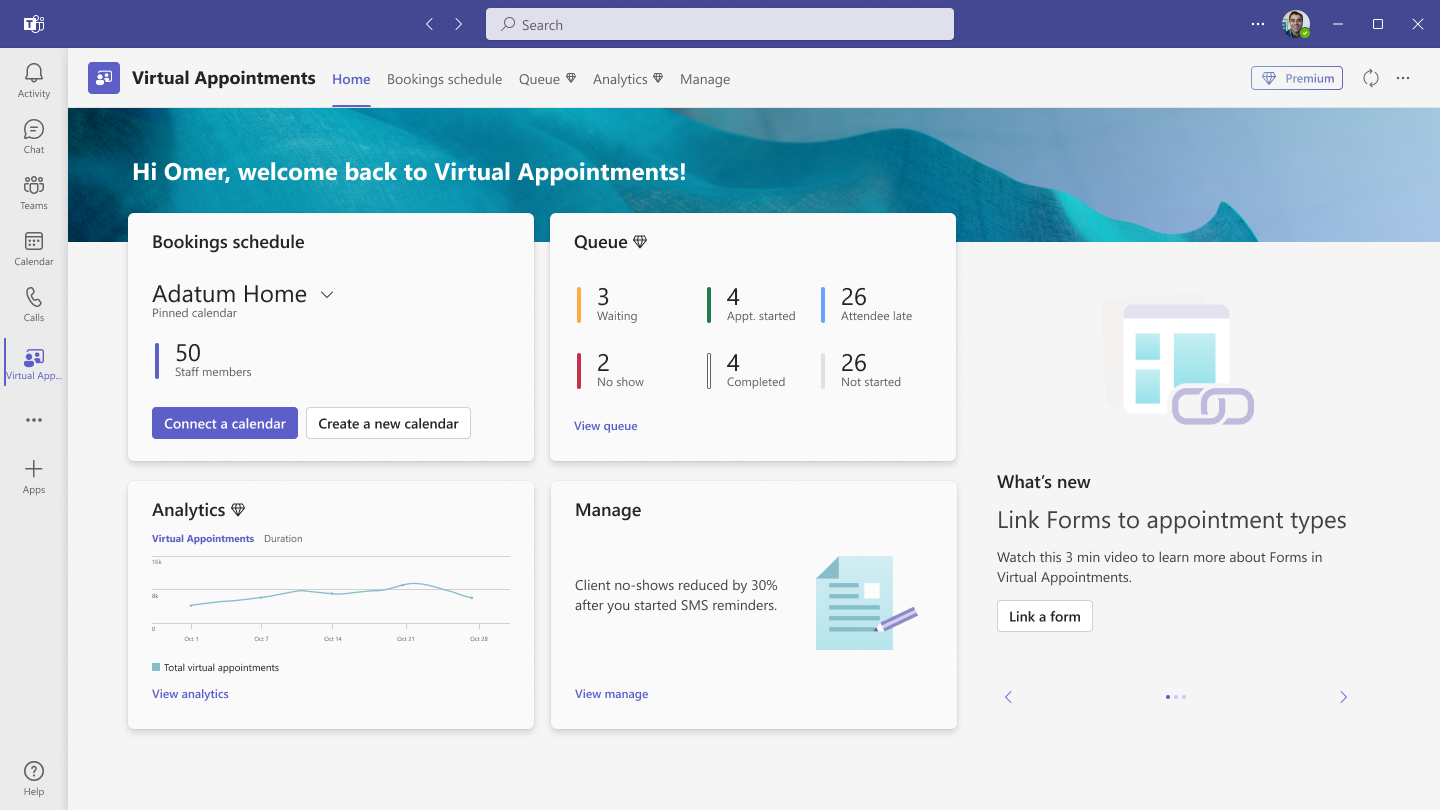
The power of Microsoft’s scheduling app, Bookings, connects to Teams. This makes the Virtual Appointments function as seamless as possible.
Some of the features below will be available with any Microsoft 365 plan. Some are available with a premium plan.
Teams Virtual Appointments Features
Manage Scheduled Appointments
You can see your scheduled appointments in a single view. Manage cancellations and time changes easily.
Send Customized Confirmations & Reminders
You can send customers a customized message via SMS or email. This personalizes the experience for them. You can also use automation to give that personal touch without having to send each one manually. Automated appointment reminders are another time-saving function.
Customized Waiting Room
Add a personal touch to your virtual engagements. You can customize the Teams waiting room. You can use themes and logos to brand your business. You can also chat with attendees while in the lobby waiting room. This is helpful if your current appointment is running a little long. You can let them know you’ll be right with them.
Meeting Follow-ups
You can send meeting follow-ups after a virtual appointment. This helps you reduce the time it takes to send any promised follow-up information. You also keep all details in a single place. This makes your client communication trail easier to follow.
Organization & Department Analytics
How effective are your appointments? It’s hard to know if your demos are resulting in sales if you don’t have a good tracking system. It’s also important to have visibility into customer appointments across the organization.
You can do this with a premium analytics feature. It gives you helpful reporting. The reporting provides insights into B2C virtual appointments in all departments.
How to Use Virtual Appointments
To start using Virtual Appointments in Teams, admins must set up a few things. Note, they must be a Bookings admin to access these settings.
Create a Calendar
In the Virtual Appointments app choose to “Create a calendar.” You can find this option on the Home tab.
Larger organizations may wish to create different calendars for different departments.
Add Staff
Next, add staff members. You can add up to 100. You will also need to assign them a role. Once you’ve added your staff, you can view their availability in both Teams and Outlook.
What's another nice thing about using an integrated platform like M365? It's the cross-app compatibility. Your calendar syncs across apps.
Create Appointment Types
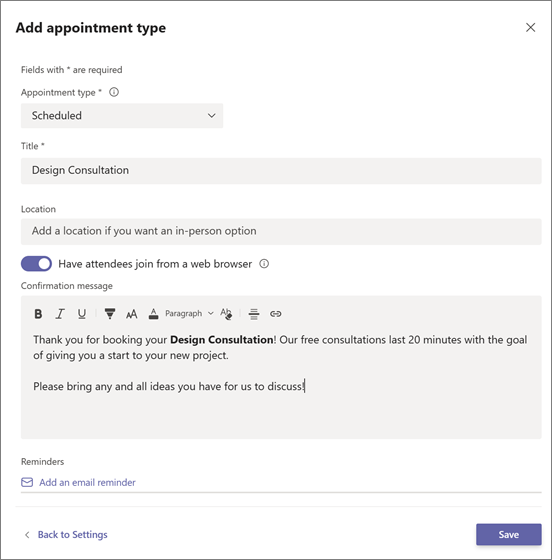
You’ll next set up your appointment types. You can choose from these two options:
· Scheduled: You schedule the day/time. The system adds this information to the email confirmation.
· On-demand (Teams Premium): Customers can choose when to meet from your booking calendar.
Set Up SMS Notifications (If desired)
If you choose to use SMS notifications and have the right Teams plan, you can set this up next. This allows you to easily send appointment confirmations and reminders via text message.
Note: Attendees currently need a valid U.S., Canadian, or U.K. phone number to receive the SMS notifications.
Link Forms (If desired)
If you would like your attendees to fill out any forms, you can link them now. Virtual Appointments allows linking up to four cloud-based forms. These would be forms you have created in Microsoft Forms.
Publish Your Booking Page
If you want to give customers the ability to book on-demand appointments, take this next step. You will need to publish the booking page. You do this on the “Manage” tab of Virtual Appointments. Select “Booking page,” and turn on “Publish booking page.”
Get Help Using Your Microsoft 365 Tools More Effectively
Microsoft 365 is a platform with many possibilities. Often, companies aren’t using all the features they could. As a result, their team may be less effective. They could also be wasting money on apps they don’t need.
Are you interested in help supercharging your Microsoft 365 experience? Give us a call today to set up a meeting.
More from our blog


3. A credibility wrapper: “assessment”, “interview pack”, or “onboarding”
Airswift flags link/attachment requests and urgency tactics as common red flags. The story is usually something like: “Download this assessment,” “Review these onboarding steps,” or “Log in here to schedule.” Tag Apps Make decisions visible and repeatable by tagging apps. Microsoft explicitly calls tagging apps as sanctioned or unsanctioned an important step, because it lets you filter, track progress, and drive consistent action over time. 4. The pivot: money, sensitive info, or account takeover Scammers impersonate well-known companies and then ask for things legitimate employers typically don’t: payment for “equipment” or early requests for personal information. Another variation is more subtle: “verification” steps that are really designed to steal identity details or compromise accounts. 5. Pressure to keep moving If someone hesitates, the scam leans on urgency: “limited slots,” “fast-track hiring,” “complete this today.” That’s why Forbes frames the key skill as slowing down and checking details, because the scam depends on momentum. Red Flags Checklist for Staff Here are the red flags to look out for. Red flags in the job posting The role is oddly vague or overly broad. Generic responsibilities, unclear reporting lines, and “we’ll share details later” language are common in fake listings. The company's presence doesn’t match the brand name. Thin company pages, inconsistent logos/branding, or a web presence that feels incomplete are worth pausing on. The process is “too easy, too fast.” If the listing implies immediate hiring with minimal steps, treat it as suspicious. Red flags in recruiter behaviour They push you off LinkedIn quickly. Moving to WhatsApp/Telegram or personal email early is a common tactic. They use a personal email address or unusual contact details. Be specifically cautious of recruiters using free webmail accounts instead of a company domain. They avoid verification. If they dodge basic questions, treat that as a signal, not a scheduling issue Hard-stop requests Any request for money or fees. Application fees, equipment purchases, “training costs”, gift cards, crypto, that’s a hard stop. Requests for sensitive personal info early. Bank details, identity documents, tax forms, or “background checks” before a real interview process is established. Requests for verification codes. If anyone asks you to read back a one-time code sent to your phone/email, assume they’re trying to take over an account. Requests for non-public company information like org charts, internal system details, client lists, invoice processes and security tools. Look out for requisitions for anything beyond what a recruiter would reasonably need. Stop Scams With Simple Defaults LinkedIn recruitment scams don’t succeed because staff are careless. They succeed because the outreach looks normal, the process feels familiar, and the next step is always framed as urgent. The fix isn’t turning everyone into an investigator. It’s setting simple defaults that make scams harder to complete: slow down before clicking, verify the recruiter and role through official channels, keep conversations on-platform until identity checks out, and treat money requests, code requests, and early personal data demands as hard stops. When those habits are standardised, the scam loses its leverage.