
23 November 2026
The Questions to Ask an IT Support Company Before You Switch
By Jack Wetson-Catt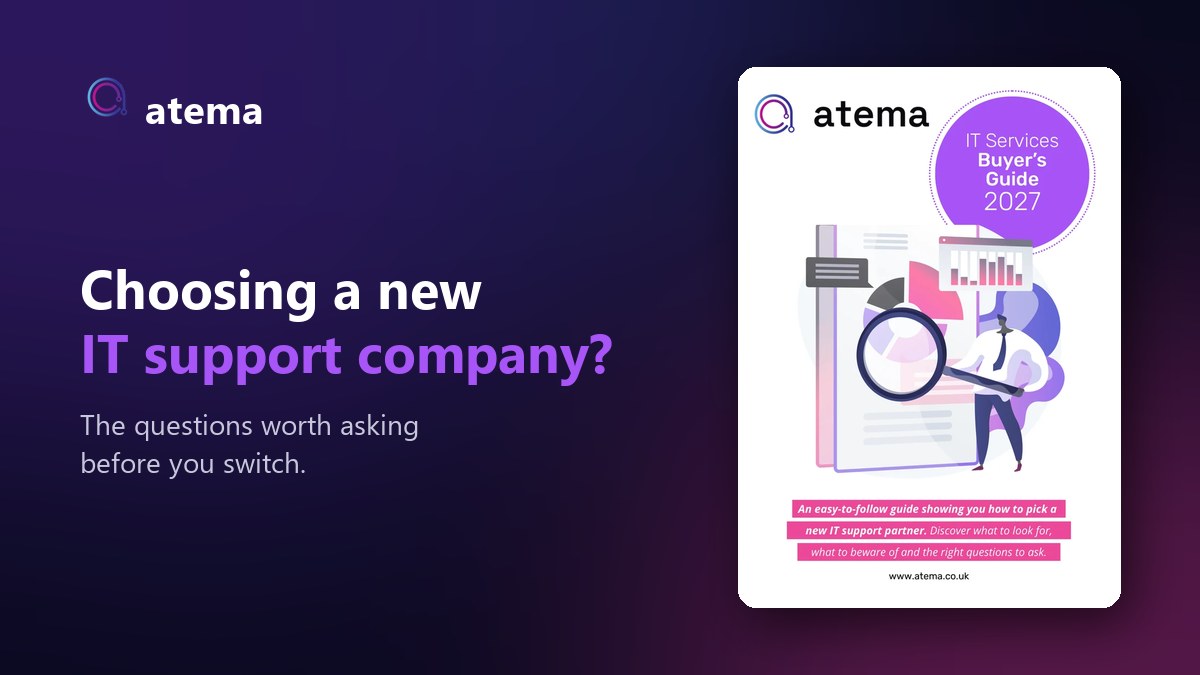
Hardly anyone leaves their IT support company because of one dramatic failure. It is almost always quieter than that. A ticket that drags on for a week. A call that is not returned. An invoice with a line on it nobody mentioned. Each one is small enough to let go, until one day you realise you have stopped expecting better.
By the time most business owners start looking around, they are not short of options. They are short of a way to tell one IT company from another, because on the surface they all say the same things. The website promises, the sales call reassures, and six months later you are back where you started with a different logo on the invoice.
The way through that is not a longer sales pitch. It is better questions. Here are the ones worth asking any IT company before you sign anything, and what a good answer actually sounds like.
"How quickly will you fix things, and how quickly will you reply?"
These are two different questions, and the second one matters more than people expect. Some problems genuinely take time to get to the bottom of, and no honest provider will promise an instant fix for everything. What you are really testing is whether you will be kept informed while it happens.
Ask them to be specific. How long until someone acknowledges a new request? How long until someone is actively working on it? What happens if you cannot log in at all, or if you are hit by ransomware on a Monday morning? Vague answers here ("we aim to be responsive") tend to predict vague service. You want to hear numbers, and you want to hear what they do when something falls outside the normal.
"What do you do to stop problems happening in the first place?"
This is the question that separates a supplier from a partner. A supplier waits for you to report that something is broken and then fixes it. A partner is working away in the background so that most of those little breakages never reach you.
Ask what they actually do between your support calls. Are they monitoring your systems, applying updates, checking your backups really work rather than assuming they do? Can they schedule the disruptive maintenance for outside your working hours? If the honest answer is that they mostly react to tickets, you will spend the relationship paying for a fire brigade rather than a smoke alarm. Good ongoing cover should be the safety net you rarely need, which is the whole idea behind proper managed IT support.
"Who, exactly, will be looking after us?"
It is surprising how often this gets overlooked, and how much it tells you. When you ring up with a problem, who answers? Will it be the same people each time, who already know your setup, or whoever happens to be free that day?
Ask who does your strategic reviews, who you speak to when you are not happy, and what happens when your usual contact is on holiday. You are not just checking competence here. You are checking whether these are people you actually want to deal with, because you will be dealing with them a lot. The right answer feels less like being passed to a queue and more like having someone on your side who knows your name.
"Can you explain something technical without the jargon?"
Put them on the spot, politely. Ask them to explain how they would protect your business from a common threat, or how your backups work, in plain English. You are not trying to catch them out on the detail. You are finding out whether they can make the complicated stuff understandable, or whether they hide behind it.
This matters more than it seems. If you cannot get a straight answer out of someone while they are trying to win your business, you will have no chance once they have it. A good partner is happy to educate you, because they know a client who understands the basics of their own security is a safer client. If every question is brushed off with "you do not need to worry about that", take it as a warning, not reassurance.
"How will you keep up as our business changes?"
Your business will not look the same in a year. You will add people, change how you work, take on new software, maybe open another location. The question is whether your IT provider will notice, or whether they will keep running the setup you had when you signed.
Ask how they stay on top of what is changing in your business, and how often you will actually sit down and review things. The answer tells you whether they see your technology as something to maintain or something to help you grow. If they cannot keep track of how your business is run, they cannot advise you on it, and you are back to having a supplier rather than a partner.
A quick word on trust
One more thing, and it is less a question than a mindset. IT support is an unregulated industry. Anyone can set up and call themselves an IT company, with no standard they must meet. That is not a reason to be cynical, but it is a very good reason to ask for proof rather than take promises at face value: references, real examples, and clients who will actually speak to you. We are happy for ours to do exactly that, which is why we point people at our client case studies rather than just quoting ourselves.
Take the full list with you
The questions above are the ones that reveal the most, but they are not the whole picture. We have put the complete set, along with the reasons businesses switch and what to watch out for, into our free IT Services Buyer's Guide. There is no form and no email required, and it is genuinely useful whether you end up talking to us or not.
Read it before your next conversation with an IT company. Walking in with the right questions is the single easiest way to make sure you end up with a partner, not just another supplier.
Written by
Jack Wetson-CattJack co-founded Atema in 2017 and leads the team day to day, bringing years of IT experience across telecoms, finance and legal to how Atema supports its own clients.